Key facts
- Common well pressure switch settings are 30/50 psi and 40/60 psi.NGWA: WellOwner.org
- Tank pre-charge is usually set about 2 psi below the pump cut-in pressure, with the tank empty of water.NGWA: WellOwner.org
- Private wells are not regulated by the EPA, so the owner is responsible for the well and its water.EPA: Private Drinking Water Wells
The job of the tank
A well pump moves water from the ground to your house. If it fed the taps directly, it would start every time you rinsed a glass. That wears out the motor and the switch quickly.
The pressure tank solves this. It holds a reserve of water and keeps it under pressure, so the pump can run in longer, less frequent cycles. It also smooths out pressure, so you do not feel big swings at the tap.
What is inside the tank
Most modern tanks have two sides split by a flexible barrier, either a bladder or a diaphragm. One side holds water. The other side holds air, set at the factory or by you through a small air valve on the top or side.
Water cannot be squeezed, but air can. When the pump pushes water in, the air side is compressed and the pressure rises. When you open a tap, the compressed air expands and pushes the water back out.
- Water side: connects to your plumbing through the bottom or side port.
- Air side: sealed, with a valve that looks like a tire valve (Schrader).
- Barrier: a bladder or diaphragm that keeps air and water apart.
The cycle step by step
- Pump is off, tank is fullPressure sits at or near the cut-out setting. Water in the tank is under pressure from the compressed air.
- You use waterAir pushes water out of the tank to your taps. Pressure slowly drops.
- Pressure reaches cut-inThe pressure switch senses the drop and closes its contacts. The pump starts.
- Pump refills the tankWater flows to the house and into the tank at the same time, and pressure climbs.
- Pressure reaches cut-outThe switch opens and the pump stops. The cycle repeats.
The two trigger points are the cut-in and cut-out pressures. Common switch settings are 30/50 psi and 40/60 psi, meaning the pump starts at the lower number and stops at the higher one.
Why the pre-charge matters
The air side has its own starting pressure, called the pre-charge. It is usually set about 2 psi below the pump cut-in pressure, and it must be checked with the tank empty of water. A 30/50 system is usually charged to about 28 psi, and a 40/60 system to about 38 psi.
If the pre-charge is wrong, the tank holds less usable water. The pump then starts more often, which is called short cycling. See our pages on pre-charge and waterlogged tanks for how to check it.
Parts you will see around the tank
| Part | What it does |
|---|---|
| Pressure switch | Turns the pump on at cut-in and off at cut-out |
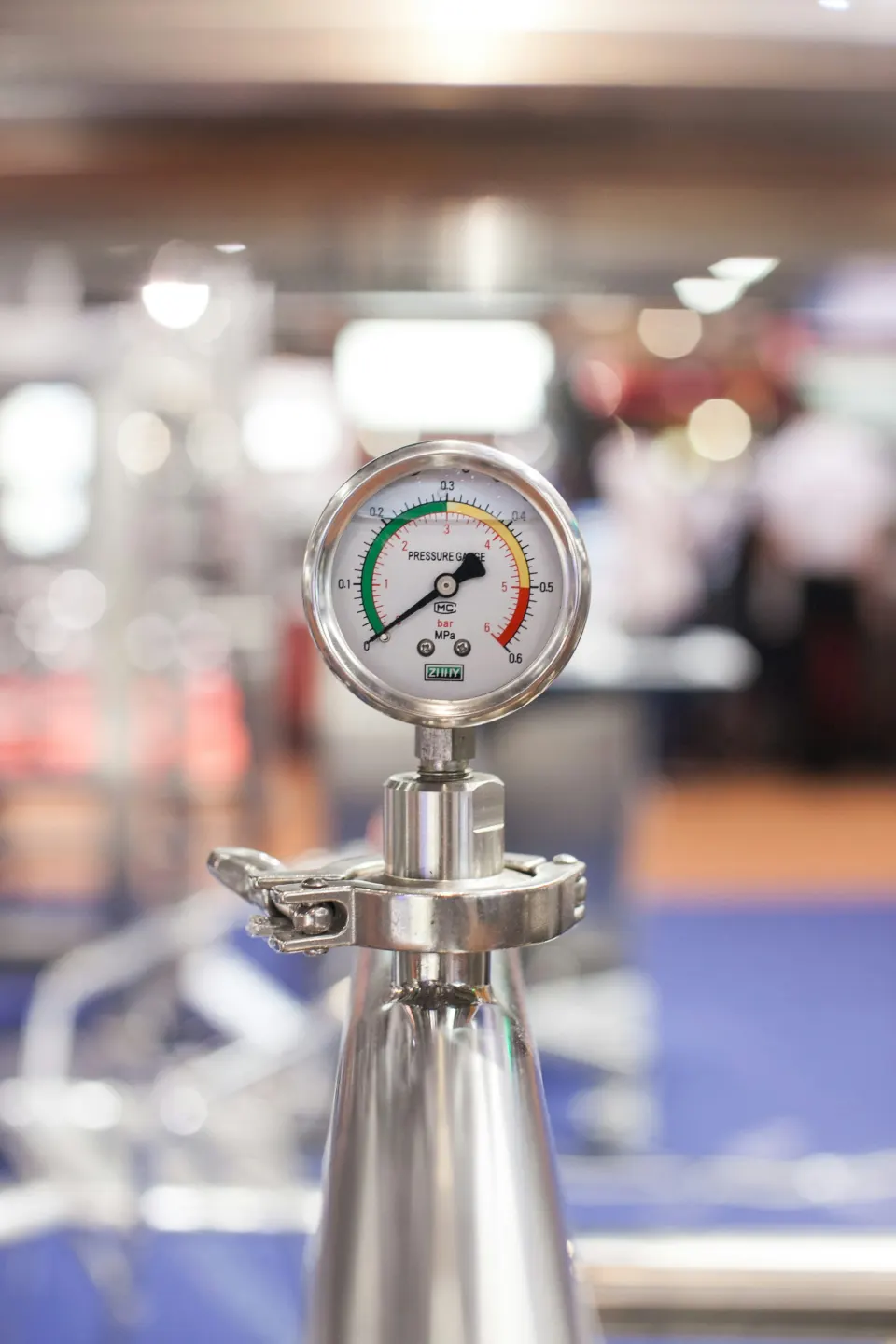
| Pressure gauge | Shows system pressure while the pump runs and rests |
| Tank tee | Fitting that joins the tank, switch, gauge and house line |
| Pressure relief valve | Opens if pressure goes too high, a safety device |
| Drain valve | Lets you empty the tank for service |
| Air valve | Lets you check and adjust the tank pre-charge |
Tank types in brief
Older systems may have a plain steel tank with no barrier, where water and air touch. These need air added over time. Newer bladder and diaphragm tanks keep air separate and usually need only a periodic pre-charge check. Our page on tank types compares them.
What it means for you
You do not need to understand every part to spot trouble. A pump that clicks on and off often, spurting taps, or a tank that feels heavy and full when tapped are all signs to check the pre-charge first. Private wells are not regulated by the EPA, so the maintenance is yours to schedule.
What happens when the power goes out
With power off, the pump cannot refill the tank. You can still draw the usable water stored in the tank, which is only the drawdown portion, not the full tank volume. Once pressure falls to the point where the air side has fully expanded, taps run weakly or stop. That is why a well house without a generator runs out of water quickly after an outage.
If you lose power often, ask a contractor about a generator hookup sized for the pump. Our pump pages cover generator planning.
Common questions about how the system behaves
People often notice the tank only when something changes. The table below links common symptoms to the part of the cycle that is probably off.
| What you notice | Where to look first |
|---|---|
| Pump starts every few seconds | Tank pre-charge and waterlogging |
| Pressure rises and falls at the tap | Pre-charge, tank size or a failing switch |
| Pump runs but pressure never builds | Pump, check valve, leak or low water level |
| Pump never starts | Power, switch contacts, or switch setting |
| Water spits from taps | Air in lines, or a failed bladder pushing air into the water |
Matching a symptom to a stage of the cycle saves money. A quick pre-charge check often explains what looked like a pump failure.
When to call a professional
Checking the air valve and reading the gauge is a safe homeowner task. Wiring work inside the pressure switch, cutting pipe, or lifting a heavy full tank is more risky. Call a licensed well contractor or electrician if you see burned contacts, a leaking tank body, or repeated breaker trips.
Questions people ask
Do I need a pressure tank with a well?
Almost every conventional well system has one. It lets the pump rest between uses. Constant pressure systems use a drive and a small tank instead, which is a different design.
Where does the water go when the tank is full?
The tank has a limit. When the air side is compressed to the cut-out pressure, only a portion of the tank volume is usable water. The rest of the volume stays as air.
Is a pressure tank the same as an expansion tank?
They look alike but do different jobs. A pressure tank manages well pump cycling. An expansion tank on a water heater absorbs heat expansion.
Why does my tank have an air valve?
The valve lets you check and set the pre-charge with a tire gauge and a small compressor or pump.
Sources
This page explains general practice for US private wells. Check your state's rules on the state pages, use a certified lab for testing, and hire a licensed well contractor for electrical or well work. See our editorial policy.
Still not sure what to do?
Ask us about your situation. A real person reads every question.
Thanks, we have your question.
We read every message and reply by email, usually within a few working days. If it is urgent (sickness, a positive E. coli test, or a flooded well), use bottled water and call your county or state health department now.