Key facts
- NGWA says a water well professional you hire should be licensed or certified.NGWA: WellOwner.org
- Rules for building and sealing wells are set by states, and the Minnesota Department of Health publishes its own as an example.Minnesota Dept. of Health: Well Construction
- Test at least once a year for total coliform bacteria and nitrate, and after flooding, repairs, or changes in taste, smell or color.Minnesota Dept. of Health: Well Water Testing
What a well pit is
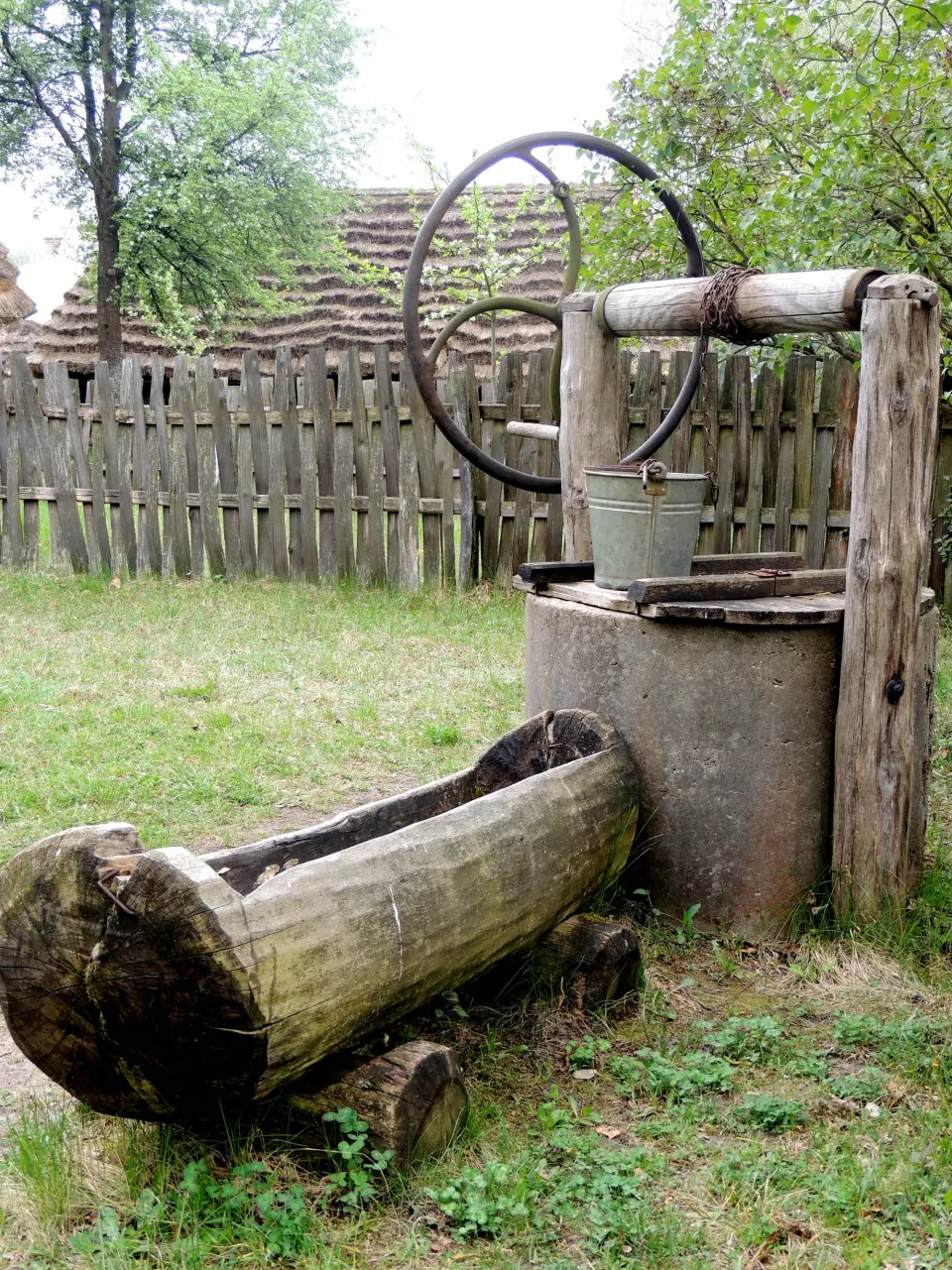
Older wells often have the casing top sitting in a pit, a concrete or masonry hole several feet deep, covered with a lid. The pipe leaves the casing inside the pit and runs out to the house. People built pits to keep the water line below frost depth. That worked, but pits have problems, which is why modern construction rules favor pitless adapters.
Why pits are a problem
- Flooding. Rain and runoff can fill the pit, putting the casing top underwater.
- Contamination. Water, insects, rodents and debris can enter the well through gaps around the casing or fittings.
- Cracks and seepage. Pits are often old, cracked or poorly sealed.
- Safety. A pit is an open hole. Lids can rot or be left off.
- Hidden hazards. Pits can hold low-oxygen air or dangerous gases, and they are hard to inspect safely.
- Poor access. Working in a pit is awkward and unsafe.
How to check a pit from above
- Look at the lid: is it solid, tight and above ground level?
- Check whether the pit has standing water.
- Look for cracks, loose masonry and signs of animals.
- See whether the casing top is above the pit floor and sealed.
- Check the ground for grading: water should run away from the pit.
- If the lid is buried, find it with a probe or old records, and have a pro check it.
If you find standing water around the casing, test for coliform bacteria with a state-certified laboratory and use another water source for drinking until the result is back.
Upgrade options
| Option | What it involves | Notes |
|---|---|---|
| Pitless adapter conversion | Install a pitless adapter on the casing below frost depth, run the line from there, and fill or remove the pit | Often the best long-term fix |
| Extend the casing above ground | Add casing or a sleeve so the top stands above the surface, with a sealed cap | Some states set minimum heights |
| Repair and seal the pit | Fix the lid, seal gaps and add drainage | Short-term fix, doesn't remove the risk |
| Drill a new well | If the old well is in poor shape | Seal the old well properly |
Our page on pitless adapters explains how that fitting works. A licensed contractor can inspect the well, quote the conversion and file any required paperwork. Check your state's rules on permits.
After the work
Disinfect the well and test the water after any work. Test at least once a year for coliform bacteria and nitrate. Keep the contractor's report, photos and well record together, and ask that the work be noted in the record.
If you are buying a house with a pit, ask for an inspection before closing. A pit isn't always a deal breaker, but you should plan for the cost of the upgrade.
Why frost matters for the line
The reason pits were built was to protect the water line from freezing. The line has to travel from the well to the house below the local frost depth, and in a pit the connection sits down inside a protected space. A pitless adapter does the same job by moving the connection below the surface at the casing wall. If your pit is shallow or poorly insulated, freezing can still be a problem. Frost depth varies by region, so check your state's rules and ask a local contractor.
Costs and planning
The cost of an upgrade depends on casing depth, soil, whether the line needs rerouting and whether a permit is needed. We don't give a number, because it varies widely. Get written quotes from licensed contractors and ask each to list what they would do with the old pit: remove it, fill it, or cap it. A filled pit should be done right, with clean material and grading so water runs away.
Plan for the upgrade when you replace the pump, since the casing is open and the crew is already on site. It can save on labor, and it lets you disinfect the well once.
If you can't upgrade right away
Some owners can't afford an upgrade now. In the meantime, reduce the risk. Replace a damaged lid with a tight, secure one that a child can't lift. Make sure surface water drains away from the pit. Keep the pit free of debris and standing water. Remove stored chemicals and fuel from the area. Test the water for coliform bacteria and nitrate at least once a year, and after any flooding or repair.
If the pit floods often, put the upgrade first on your list. A pit that fills with water is the worst case for the water and for safety, and the longer it stays, the more likely it is that bacteria reach your well.
Ask your contractor to rank any other problems they find, such as an old cap, worn casing or a leaking line, so you can plan repairs in a sensible order.
One more point: if children or pets use the yard, check that the pit lid is locked or bolted and can't be lifted by a child. A pit lid that slides off is a real danger, and securing it takes minutes.
Questions people ask
What is a well pit?
A hole beside the well casing where the water line connects. It's common on older wells and can flood, collect debris or let contamination in.
Is a well pit dangerous?
It can be. Pits can fill with water, lack breathable air and are a fall hazard. Don't enter one, and call a licensed contractor.
Can I convert a well pit to a pitless adapter?
Often yes. A contractor installs a pitless adapter on the casing below frost depth and fills in or removes the pit. Check your state's permit rules.
Should I test my water if my pit floods?
Yes. Flooding can carry bacteria into the well. Test for coliform bacteria with a state-certified lab and use another water source until the result is back.
Sources
- NGWA: WellOwner.org
- Minnesota Dept. of Health: Well Construction
- Minnesota Dept. of Health: Well Water Testing
This page explains general practice for US private wells. Check your state's rules on the state pages, use a certified lab for testing, and hire a licensed well contractor for electrical or well work. See our editorial policy.
Still not sure what to do?
Ask us about your situation. A real person reads every question.
Thanks, we have your question.
We read every message and reply by email, usually within a few working days. If it is urgent (sickness, a positive E. coli test, or a flooded well), use bottled water and call your county or state health department now.